
Choosing the Right Soldering Iron
Choosing the right soldering iron makes electronics repair easier, safer and more reliable. This guide explains the important features to consider when selecting a soldering iron for electronic work.
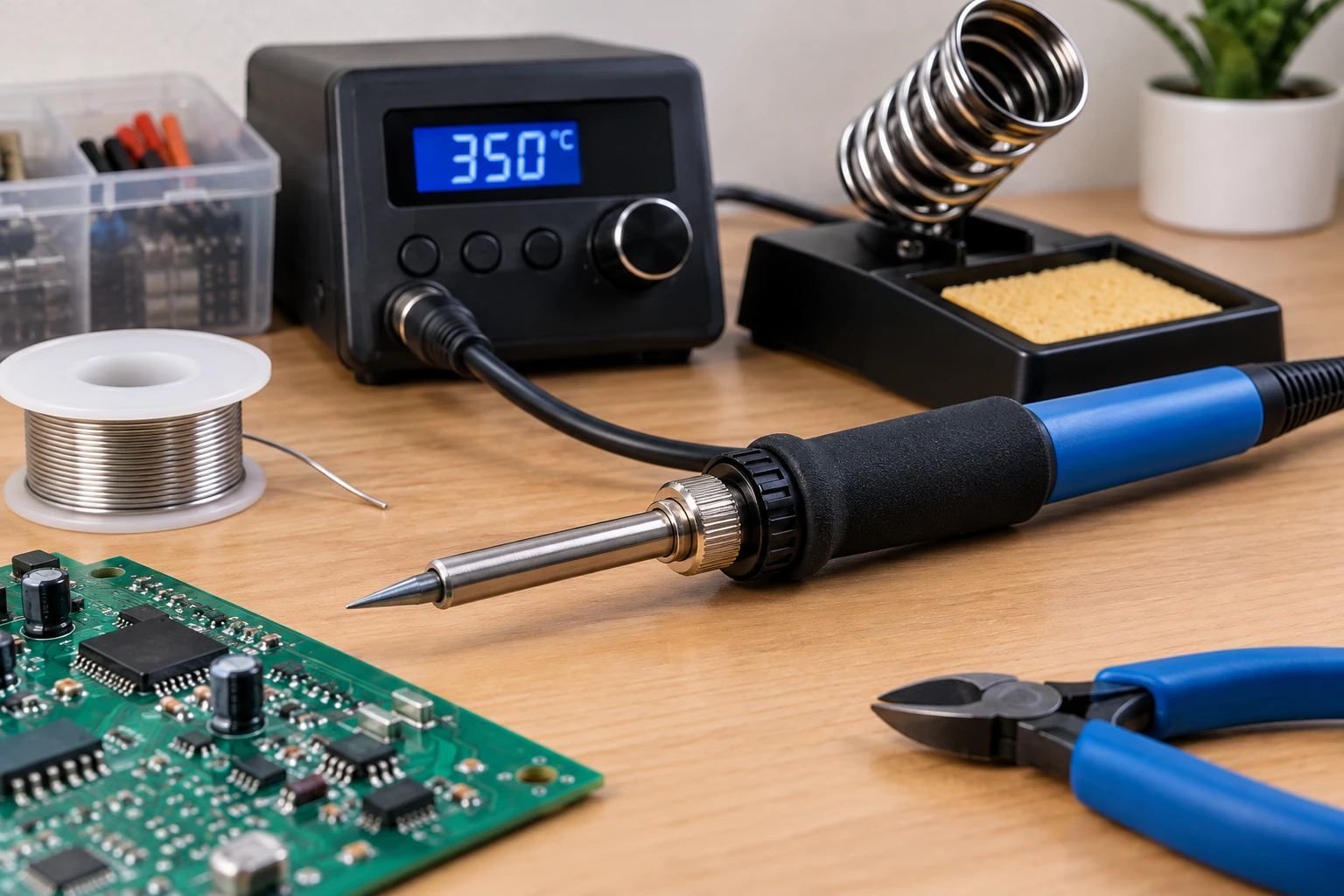
1. Why the Soldering Iron Matters
A soldering iron is one of the most important tools on an electronics workbench. The correct temperature, tip size and power level can make the difference between a clean solder joint and a damaged circuit board.
For electronics work, temperature control is especially useful because different components, circuit boards and solder types require different amounts of heat.
2. Temperature Control
A temperature-controlled soldering iron allows you to select an appropriate working temperature instead of relying on a fixed heating element.
| Work | Typical Temperature |
|---|---|
| Lead solder | Approximately 300–350°C |
| Lead-free solder | Approximately 330–380°C |
| Large joints | Higher temperature may be required |
| Small PCB components | Lower temperature is generally preferable |
These values are starting points rather than universal settings. The correct temperature depends on the solder, board and component being worked on.
3. Soldering Iron Power
Power determines how quickly the soldering iron can recover its temperature when heat is transferred into a circuit board or large component.
For general electronics repair, a temperature-controlled iron in the rough range of 50 to 80 watts is suitable for many jobs. Higher power does not necessarily mean a higher working temperature; it can provide better heat recovery.
4. Choosing the Tip
The soldering tip should match the size of the work. A very large tip can transfer excessive heat to small components, while an extremely small tip may struggle to transfer enough heat to larger joints.
Common tip shapes include conical, chisel and bevel tips. A small or medium chisel tip is often useful for general electronics work because it provides good contact with solder pads.
5. Temperature Recovery
A good soldering station should recover its temperature quickly after the tip contacts a component or PCB. This is particularly important when soldering connectors, ground planes and other areas that absorb heat quickly.
6. ESD Protection
When working with sensitive semiconductor devices, an ESD-safe soldering station is preferable. Proper grounding and ESD precautions help reduce the risk of damaging sensitive components.
7. Practical Features
Useful features to consider include:
- Adjustable temperature
- Fast heat-up
- Good temperature recovery
- Replaceable soldering tips
- ESD protection
- Comfortable handle
- Stable stand
- Readily available replacement parts
Conclusion
For electronics repair, a temperature-controlled soldering iron with good heat recovery and interchangeable tips is a practical choice. The goal is not simply to obtain the highest possible temperature or power, but to have controlled and predictable heat when working on electronic circuits.